
【空间坐标:露天泳池】
啊,美好的一天
Happy Days
核心空间动作:
把贝克特的荒诞剧放进白天的露天泳池——女人被塞在岸上单人帐篷里动弹不得,男人在漂满盘子的水池里背对她,与随风旋转的双面背影画像构成终极孤独。
编剧:萨缪尔·贝克特
Playwright:
Samuel Beckett
导读:谷旻雯
Director: Gu Minwen
场景设计:谷旻雯
Production Designer: GU Minwen
服装设计:刘丹
Costume Desig
ner: LIU Dan
环境戏剧导演阐述:
在开放环境中的演出与剧场完全不同。演出从白天的下午开始,场地是一个真实的露天游泳池。为了表现贝克特笔下那对结婚多年却形同路人的夫妻之间的终极孤独,我把男演员放进水里,女演员放在岸上。女人被塞进岸边一个小型单人帐篷,帐篷两侧架起两台巨型电风扇,对着泳池轰轰直吹,权当她的扩音器;冷漠的男人则站在漂满各式盘子的泳池水里,永远背对着岸上的女人。泳池里还立着一幅巨大的画像,画着一个男人的背影;当现场有风吹过,巨大的画像随风旋转,画像的背面依然是同一个男人的背影——正反旋转,不变的是永远的背影。
第二幕结束时,男人推倒泳池里的画像、收走所有物件离开水池,只留下一顶小圆帽在水面漂浮;岸上的女人对着空荡荡的泳池继续絮叨,两台电扇徒劳地吹 向水面。最后一场,男人背满行李如过路旅人般从观众席走出,绕泳池一圈后试图去捞水里的帽子却怎么也够不着,只能对着水面徒劳地吹气。此时音乐慢起,播放着美国哥伦比亚号飞船返回地球时与地面指挥中心最后一次通话的录音:“呼叫哥伦比亚号,高频呼叫哥伦比亚号,再次呼叫哥伦比亚号……”Environmental Theatre Director’s Statement:
Performing in an open environment is completely different from stage theatre. The performance begins in the afternoon daylight at an outdoor swimming pool.To stage the ultimate loneliness between the married couple in Beckett's script, I placed the male actor in the water and the female actor on shore. The woman is crammed inside a small single-person tent on the poolside, flanked by two giant electric fans blowing toward the water as her amplifiers. The indifferent man stands in the pool surrounded by floating plates, his back forever turned to her. Rising from the pool is a large board painted with a man's back; when the wind blows, the board spins, revealing the exact same painted back on its reverse side—spinning in the wind, yet forever a back turned away.
At the end of Act II, the man knocks over the portrait, packs up every object, and leaves the pool, leaving only his small round hat floating on the water. The woman keeps talking to the empty pool while the two fans blow futilely across the surface. In the final scene, the man walks out from the audience loaded with bags like a passing traveler. He circles the pool and reaches for the floating hat, unable to catch it, before blowing air onto the water in silence. Slow music rises with the recording of the final ground-control transmission to the space shuttle Columbia: "Calling Columbia, high-frequency call to Columbia..."图片由阿那亚戏剧节提供
Photo courtesy of Aranya Thater Festiv


【空间坐标:火车营地,大树下】
去年的树
Last Year's Tree
编剧,导演:谷旻雯
Playwright,Director : Gu Minwen
《去年的树》在阿那亚演出阐释
《去年的树》 这出戏的剧本创作完全是基于在剧场里演出时的景象。阿那亚戏剧节邀请我在户外来朗读这个剧本实属意外。剧本台词极少,文本几乎全在描述人物的行动及剧场里发出的声音氛围。让两个演员在户外环境用朗读的方式来读这个剧本,其实是一个全新的课题,需要对这种非常规的剧本在自然环境下做全新的诠释或是实验。
全黑的剧场空间不存在了,户外环境无法完成剧场里的幻觉。在自然的场域如何重建造一个新的《去年的树》的秩序?从放入场景里的每一个物件开始。一块40cm见方的黑色冰压在一件白色的工作服上,这是第一个确定的形象也是全剧最核心的视觉形象。黑色的冰在时简中慢慢融化是等待也是对消失的某种映射。随着剧情的发展压在黑冰下皱皱巴巴被墨汁染黑的白色工作服又被挂在衣架上。演员像是升国旗似的把这件衣服升起来,又降下去,这会儿这件衣服就是工厂的大门。工作服的兜里有一个蓝牙音箱,闹铃一响就得干活。上上下下,来来去去,一个疲惫的中年人。这是关于场景的最初构想。
朗读如何表现剧本中丰富萦绕的心理空间呢?除了使用现场已有的音响系统之外,我设置了蓝牙音箱系统。蓝牙音箱放在演员的身上,是可以移动的音源,既可以表现声音的回响也可以表现来自身体内部,内心的不可言说的声音。在第三幕中,鸟在村庄里寻找火柴,每一户人家的表现方式用的是家庭相册,每翻开一页相册就是一个新的家庭,当相册打开 相应的声音就从翻相册的演员身体里发出来。由此来建造一种全新的幻觉。在第二幕的工厂大门一场,把蓝牙音箱放入工作服中,闹钟声响起来,衣服忽而变成了人。我们尝试着用声音拓展着一些新的语言。
演员的表演部分,通常由一人读,另一个表演但表演的内容不一定与朗读的内容重叠,有时是平行发生的。朗读的描述提供文本信息,另一位表演者则用身体表现高度凝炼的行动与行为。朗读的声音即是观众信息的基本来源也是一种节奏或氛围的铺垫。另一位演员作为行动者则需要在朗读的节奏中找到自己的表演节奏,好似自由的即兴布鲁斯。
事实上戏剧总是充满了变化,是实践的艺术。
到了演出现场,场地正好有一棵巨大的树,很美!怎么用呢?我们对好久不见的挚友,有什么样的祝福呢?对我来说,最最盼望的是这个老朋友去了一个好人家。有一个温暖,干净舒适的居所。
那我们就让老友的会面回到最温暖的日常里,我们在树下安排了白色的桌布,在洗碗,切菜声中,没有言语,一切都在温暖的阳光下轻轻摆动。
Staging Interpretation:
Last Year’s Tree at Aranya
The script of Last Year’s Tree was conceived entirely for the sensory landscape of an enclosed theater. The invitation from the Aranya Theatre Festival to present this work as an open-air script reading was unexpected. With minimal dialogue, the text predominantly describes characters’ actions and the auditory atmosphere of the theater. Having two actors read such an unconventional script in an outdoor setting posed a new challenge—demanding a complete reinterpretation or experimentation within the natural environment.
The pitch-black theater space was absent; the outdoor setting could not replicate theatrical illusions. How, then, to reconstruct the essence of Last Year’s Tree within nature? We began with each object placed in the space. The first and central visual motif was a 40cm² block of black ice pressed upon a white work uniform. The slow melting of the black ice became both an act of waiting and a metaphor for disappearance. As the narrative progressed, the ink-stained, crumpled uniform—once trapped beneath the ice—was hung on a clothes rack. An actor hoisted it up and down "like raising a national flag," transforming the garment into a factory gate. A Bluetooth speaker hidden in the uniform’s pocket emitted an alarm—a signal to work. The repetitive lifting and lowering embodied the exhaustion of middle age. This formed the core scenographic concept.
How could a script reading convey the rich, haunting psychological spaces within the text? Beyond the venue’s sound system, we integrated Bluetooth speakers carried by the actors. These mobile sound sources externalized echoes, internal bodily reverberations, and the ineffable voices of the mind. In Act III, as a bird searches the village for matches, each household was represented by a family photo album. Flipping a page revealed a new family, and the corresponding sounds emerged from the speaker carried by the actor handling the album—creating an entirely new layer of illusion. In Act II’s factory gate scene, the alarm ringing from the uniform’s speaker momentarily animated the garment into a human presence. We used sound to expand the language of the piece.
For performance, one actor read while the other executed physical actions—not always directly correlating to the text, but often unfolding in parallel. The narration delivered textual information, while the performer embodied distilled, abstract gestures. The reader’s voice provided both narrative foundation and rhythmic/mood scaffolding. The performing actor had to discover their own rhythm within this vocal landscape, akin to freeform blues improvisation.
Theatre, after all, thrives on adaptation—it is an art of practice.On site, we discovered a magnificent, towering tree. How to use it? What blessings might we offer a long-lost dear friend? For me, the deepest wish is for this old friend to find a warm, clean, and loving home.Thus, we returned the reunion to the warmth of the everyday: beneath the tree, we laid a white tablecloth. Amidst the clatter of dishwashing and vegetable chopping—without words—everything gently swayed in the warm sunlight.
服装设计:刘丹
Costume Designer: LIU Dan
演员:
Performers :
赵晓璐
ZHAO Xiaolu
陈 瑾
CHEN Jin
Photo courtesy of Aranya Theater Festival


【空间坐标:北岸礼堂建筑室外】
鱼刺公主
Ivona, Princess of Burgunda
核心空间动作:
用一条仅容一人行走的窄红毯自礼堂顶端凌空飞降、切入白色观众席,并在窗口架设巨型喇叭,以极简一笔介入整座建筑。
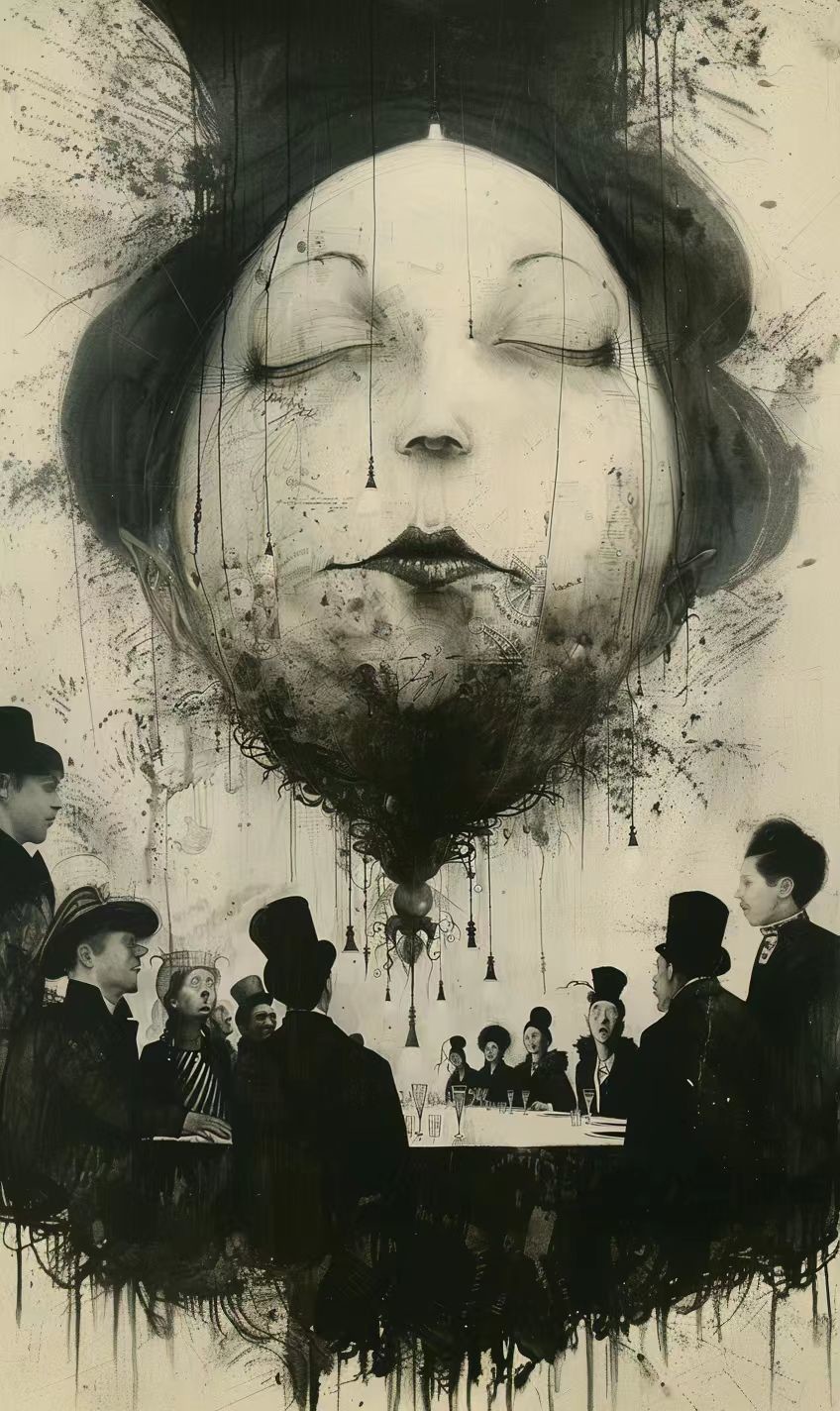
海报 AI图片作品


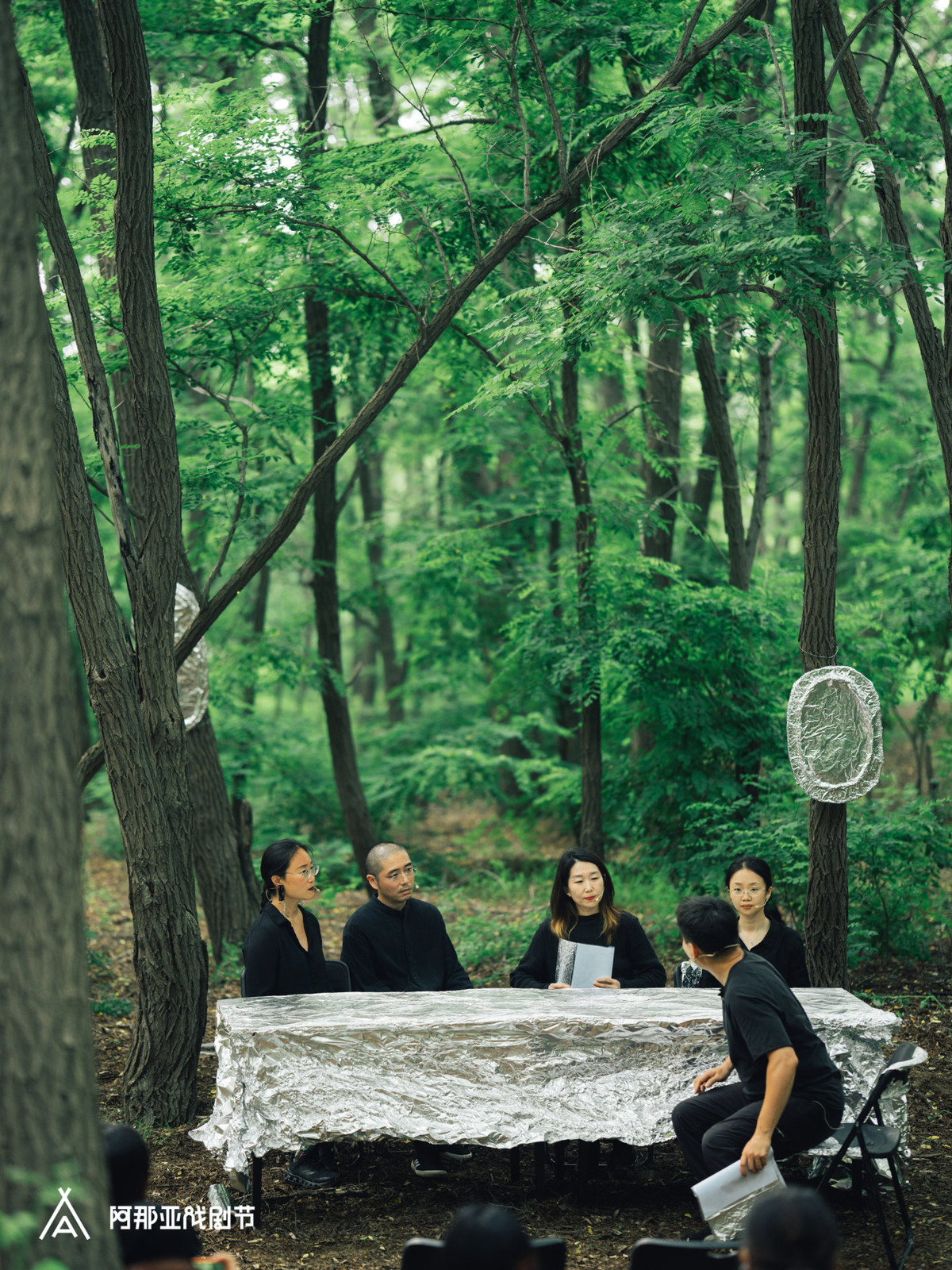
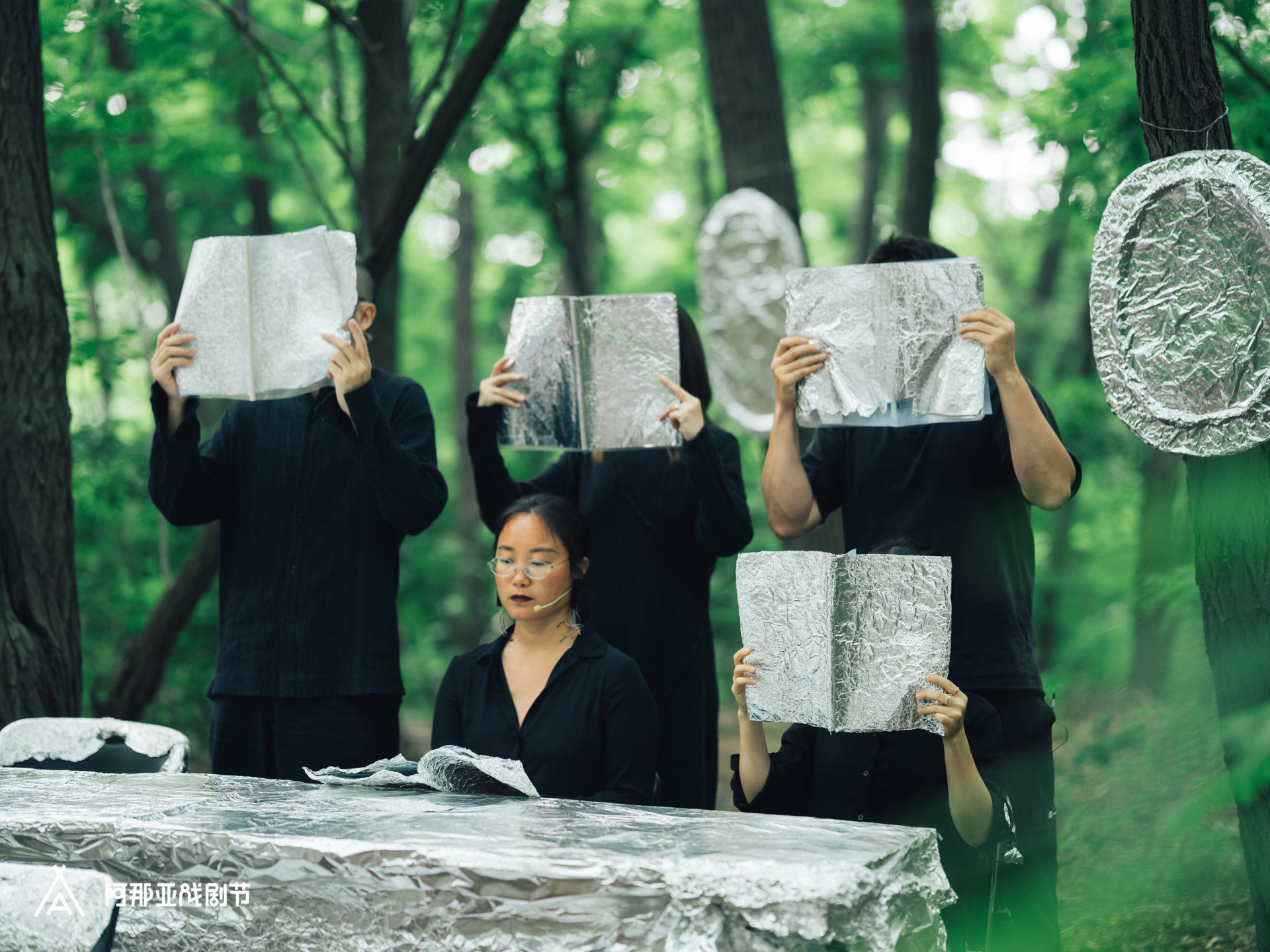
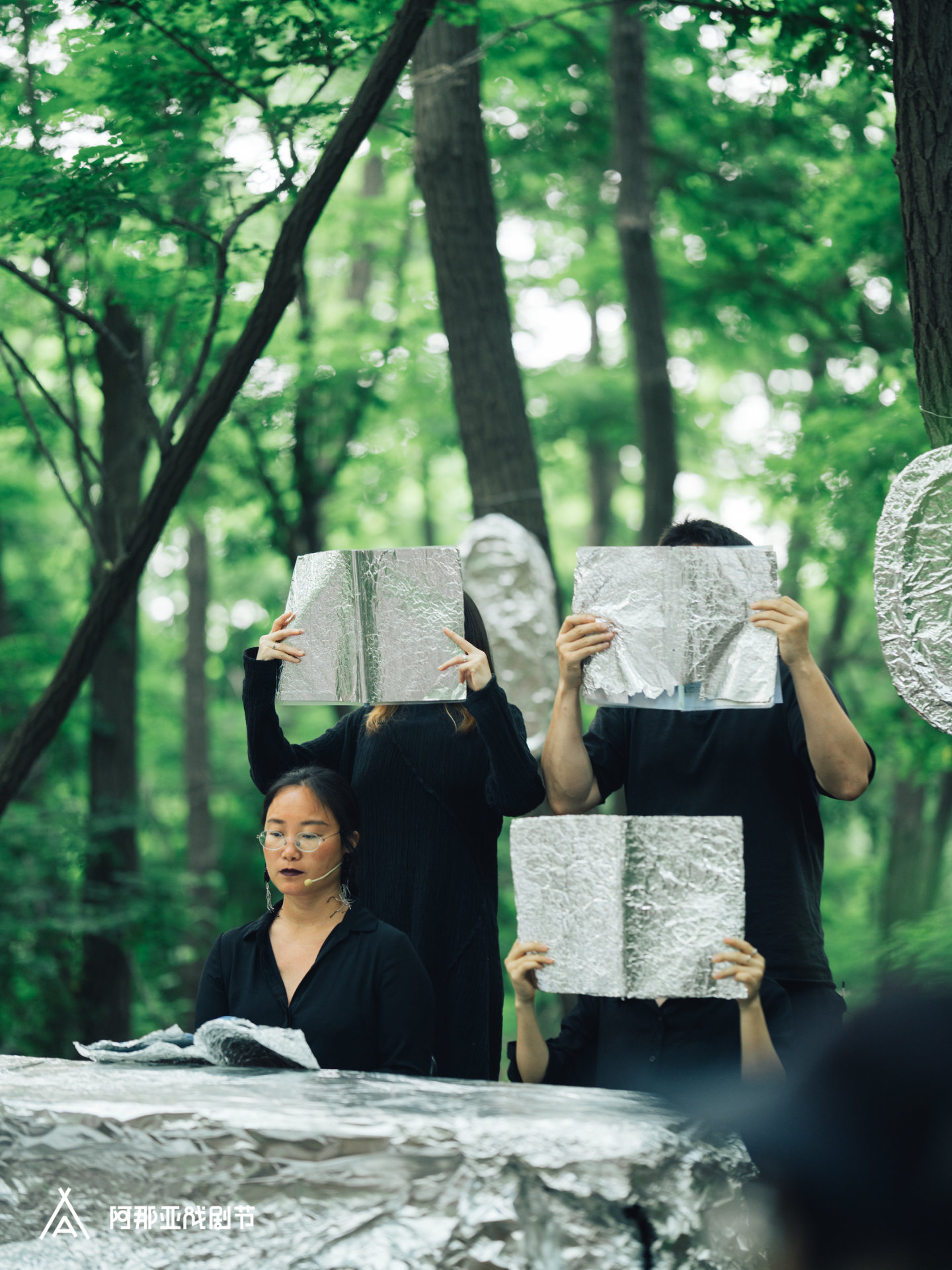
【空间坐标:阿那亚小树林】
只不过世界尽头
Juste la fin du monde
原著:让-吕克·拉戛尔斯
(法)译者:蔡燕
朗读表演:揭小凤、王亦岩、肖京晨、朱茜、郑晓贇
现场音乐:郑又村
海报 AI图片作品

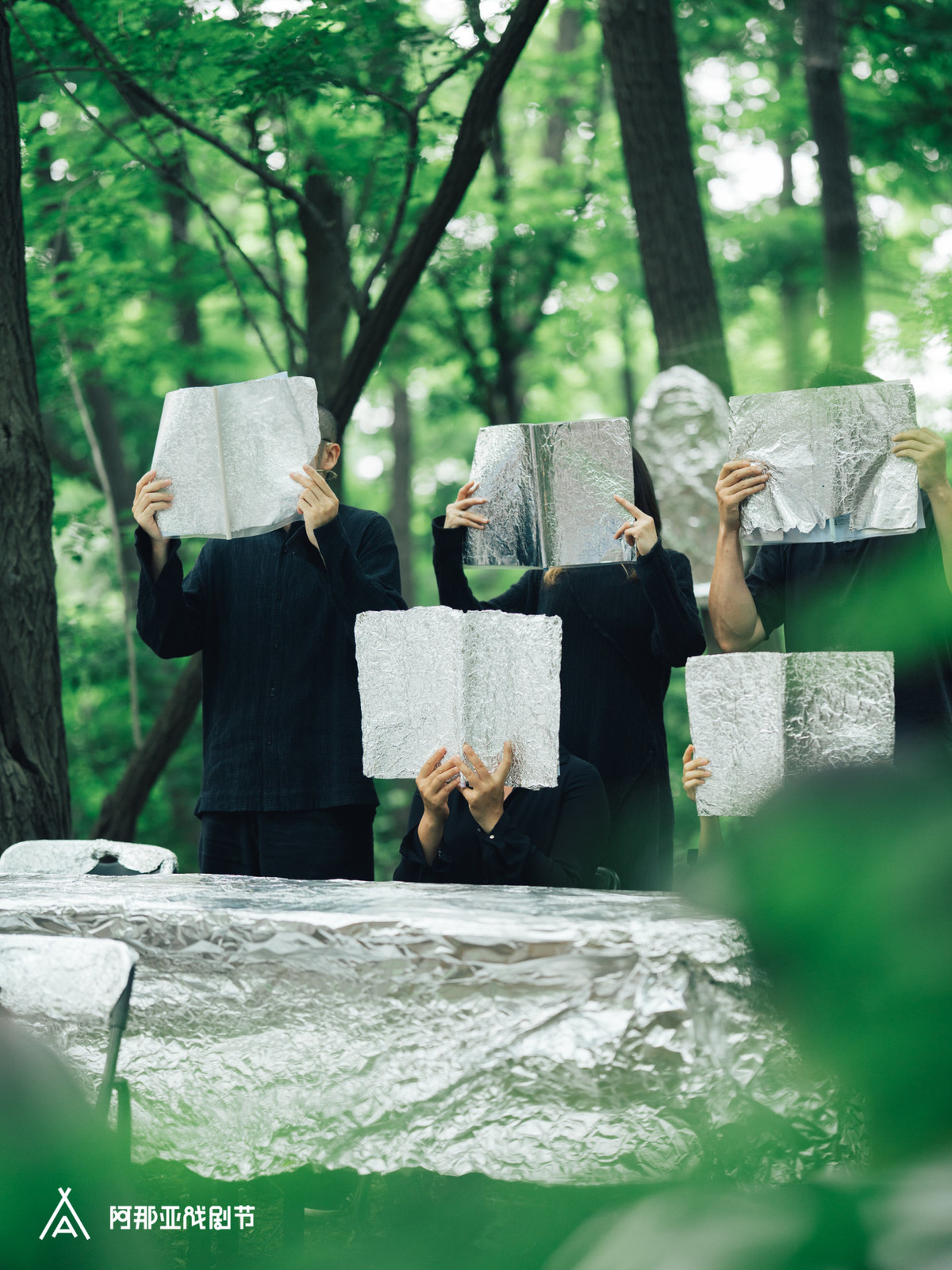
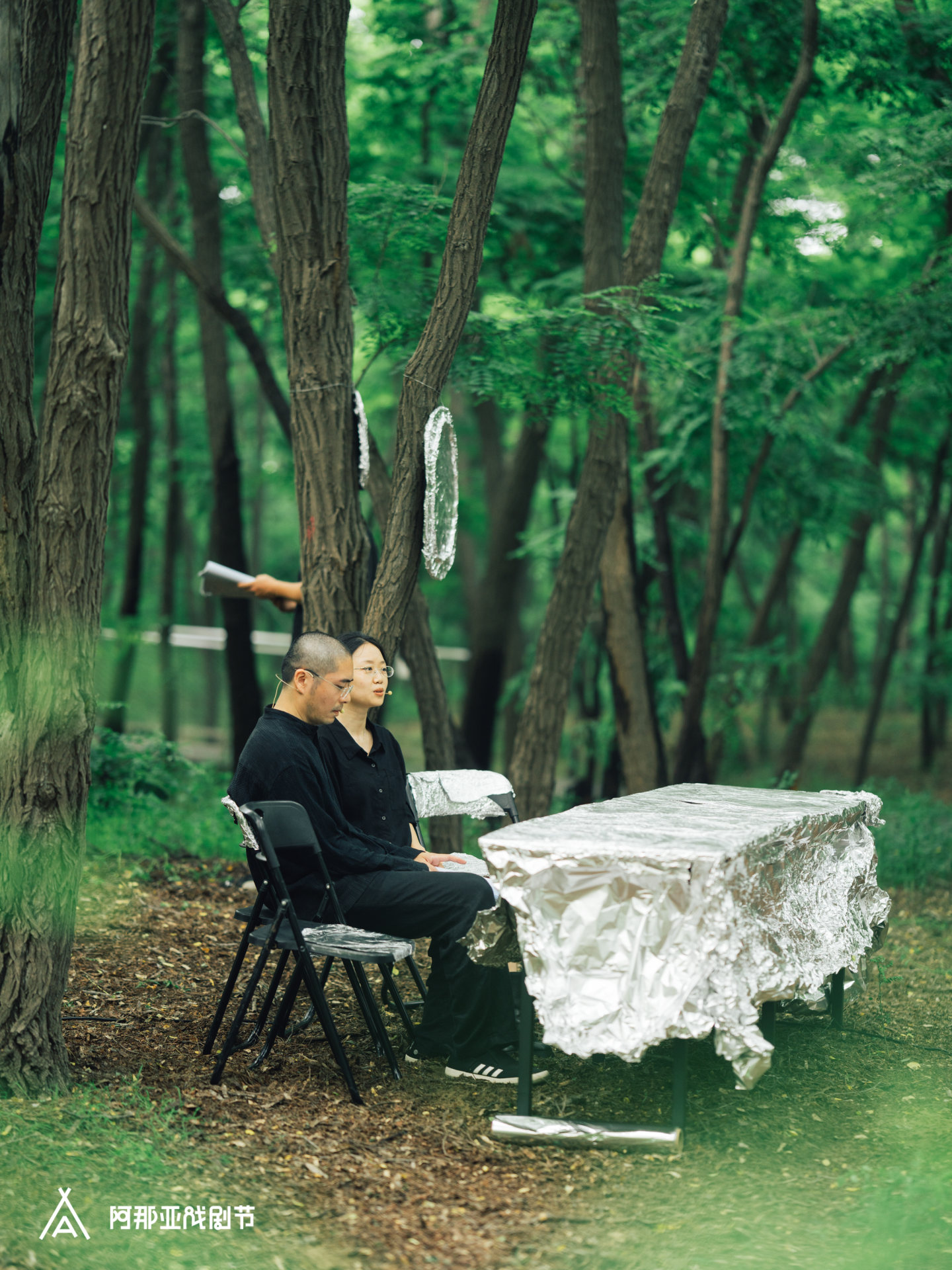
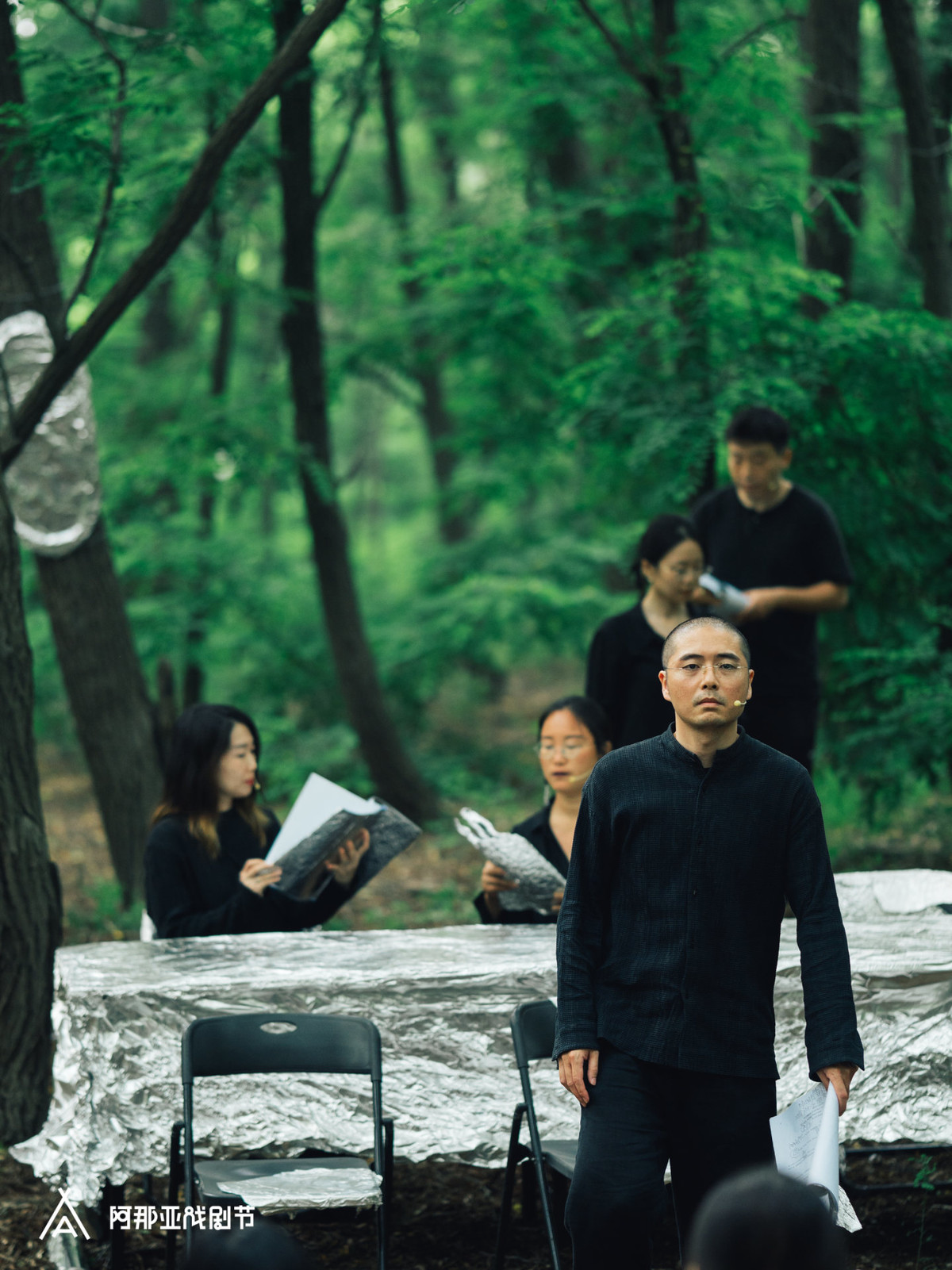
剧照
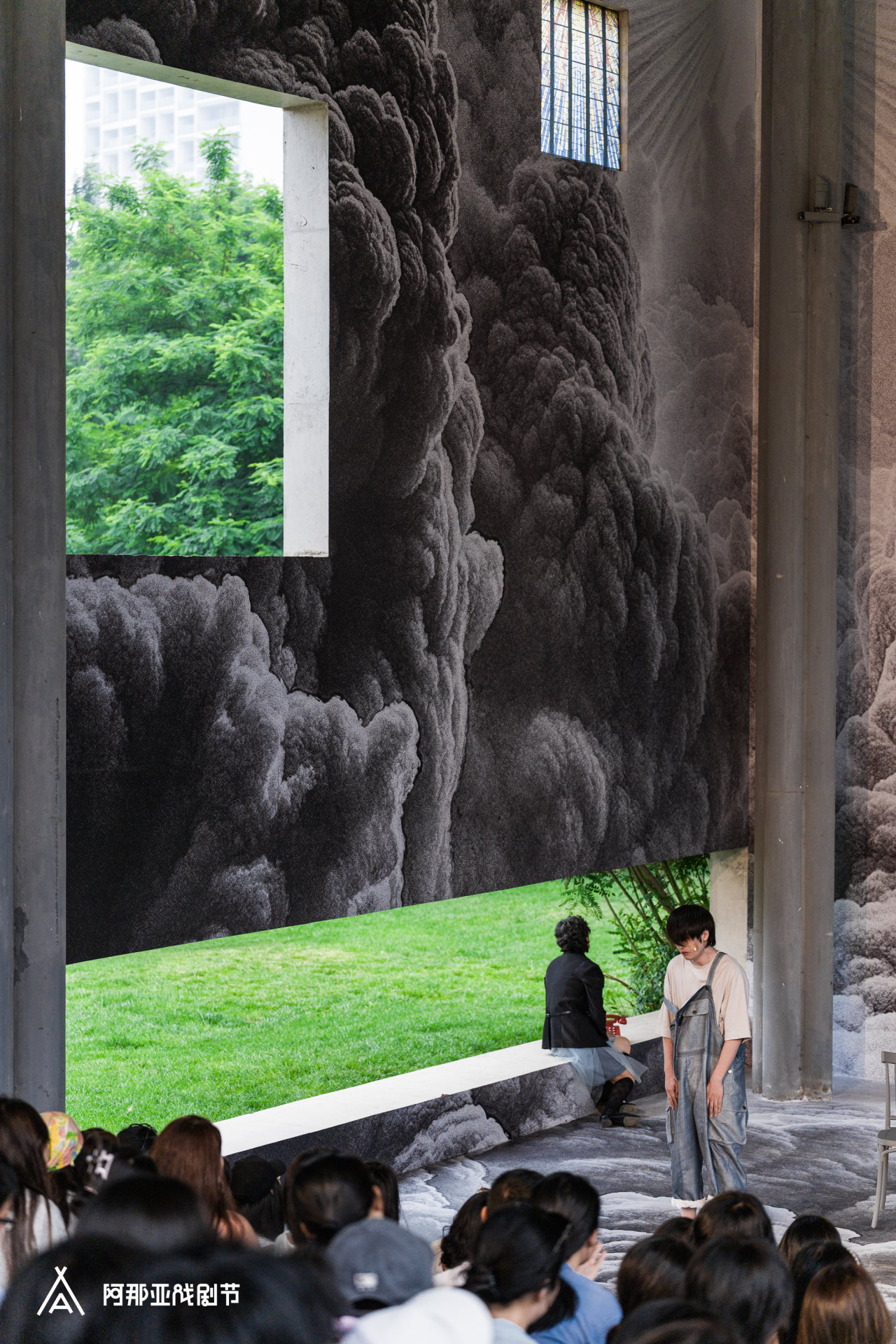
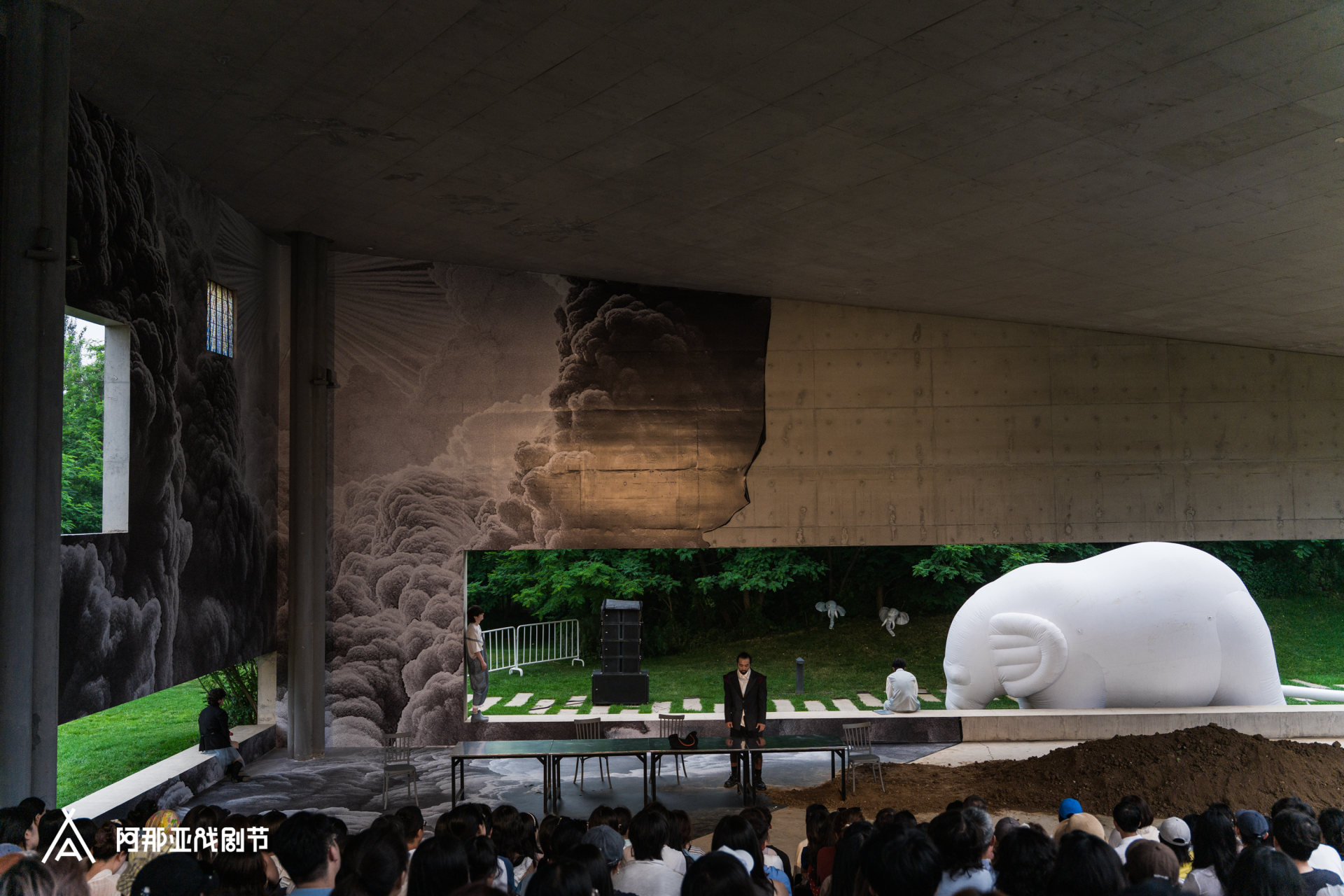
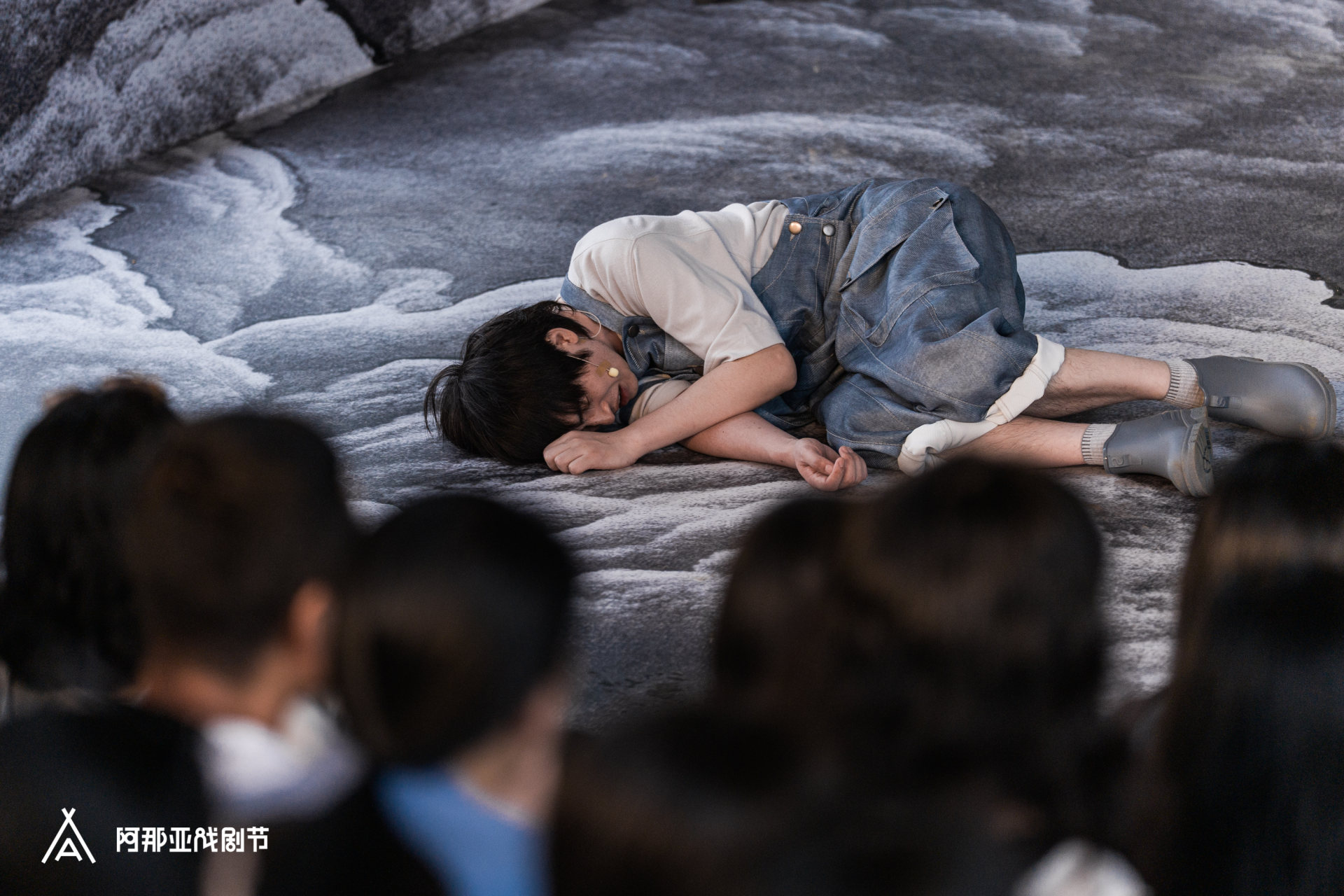
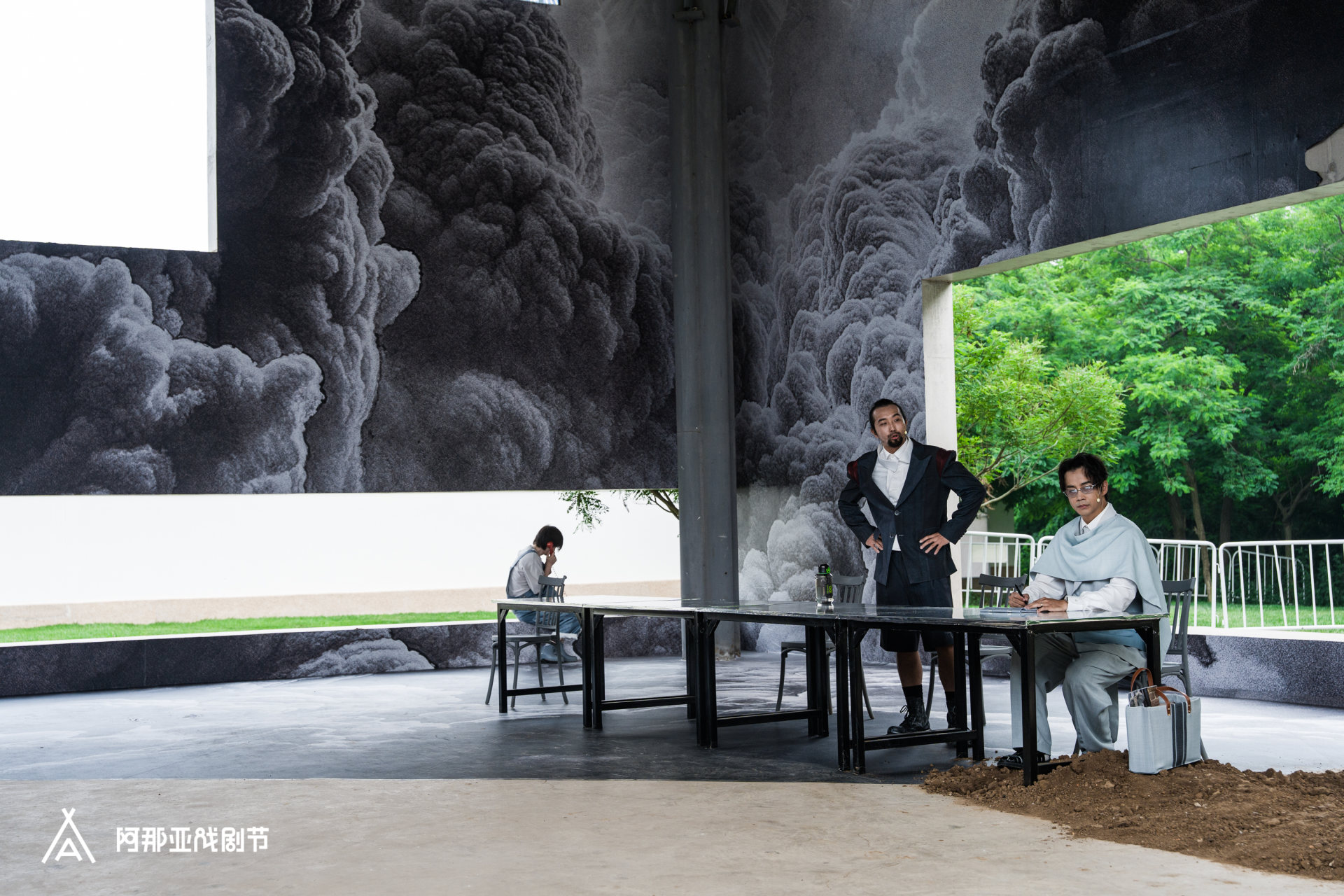
大象沉默


 冀公网安备13108202001168号